
Introduction
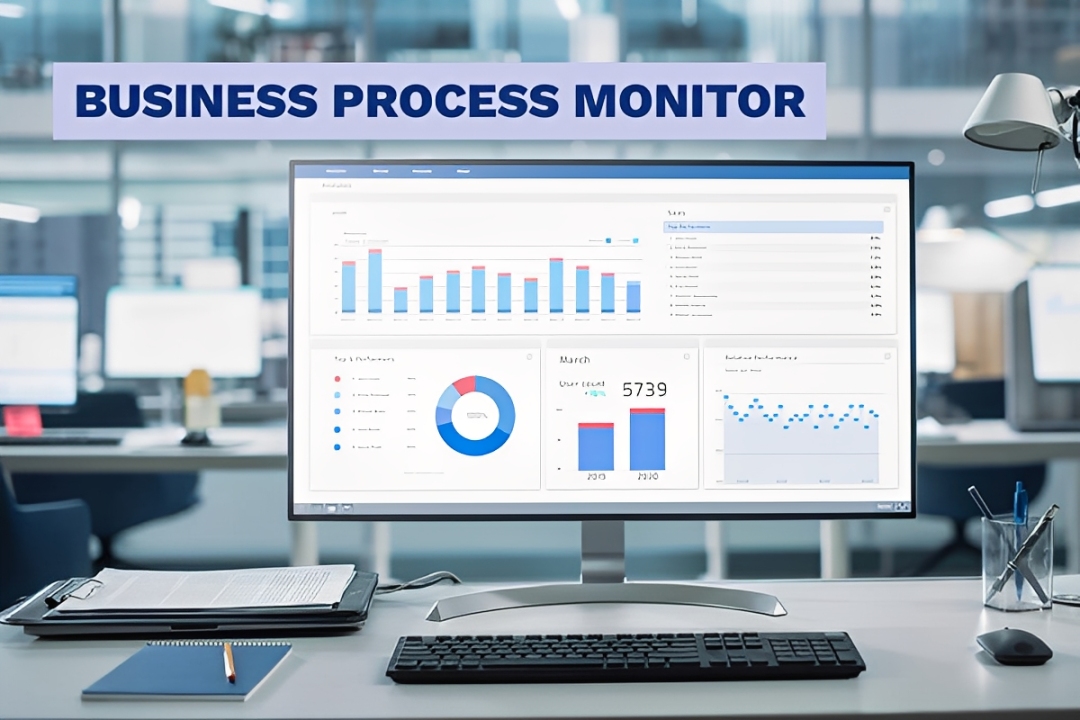
In the present time, when nowadays companies and other organizations are operating, efficiency, productivity, and compliance are highly critical success factors to attain success. Organizations are dependent to a large extent upon technology-based systems, taking into consideration the various complex tasks related to different business segments or organizational departments. A business process monitor or BPM would accordingly describe the technology tool/software system that observes and optimizes business processes.
With the use of business process monitoring, firms can pinpoint process inefficiencies, points of bottleneck, and also errors that occur online and, therefore, take corrective measures promptly. With the data from BPM systems, managers can make informed business decisions.
While organizations find themselves on the journey of adopting the concepts of digital transformation, the role of business process monitoring cannot be overstated as regards the minimization of business expenditures as well as the optimization of business services.
What Is Business Process Monitoring?
A business process monitor can be described as an automated tool that watches over business procedures. This tool enables an organization to have a wide view of how activities or operations are conducted. Measuring performances of particular procedures and overall process flow helps an organization identify any issues even before they develop into major concerns.
The main points include:
- Real-time processing: BPM allows monitoring of the process as it takes place.
- Performance metrics: The performance metrics include the task duration taken, the rate of errors, SLA, and the rate of processing.
- Alert and notification: Automatic alerts notify teams about delay notifications, exceptions, and failure notifications.
- Integration Capabilities: Integration capabilities for BPM solutions involve ERP system and CRM, as well as other applications within enterprises, integrations.
- Analytics & Reporting sustains itself through Dashboards & Reports which help management analyze trends and improve processes.
To illustrate, an organization that is employing an business process monitor solution for order fulfillment can recognize if there is any delay within the shipping process and alert the relevant team.
Importance of Business Process Monitoring
Business Process Monitoring can provide the following major benefits for every organization, regardless of its nature:
1. Operational Efficiency
Continuous monitoring may also assist in identifying the inefficiencies that might be present within processes, such as human interventions that are not needed, approvals, and bottlenecks.
2. Compliance
There are different industries like banking, healthcare, and manufacturing, which are required to comply with some rules or norms. BPM provides facilities to verify how all the processes satisfy the rules within the regulations.
3. Avoiding and Correcting Errors
Automated monitoring informs groups of any errors and/or process failures, which in turn can be fixed before they have any negative effects for the clients as well as internal business processes.
4. Data-Driven Decision Making
By means of analyzing the historical process data, the manager can determine the trend and forecast the points that may cause bottlenecks.
5. Cost Optimization
Process analysis will help in identifying areas where resources are not utilized and activities are not necessary and could be reduced, and quality can still be maintained.
6. Increased Customer Satisfaction
The procedures are continuously monitored and optimized; this helps them deliver goods and services on a timely basis.
Key Functions of the Business Process Monitor
An efficient BPM system has many characteristics that serve for the optimization of business processes:
- Workflow Tracking; Monitors tasks of various departments so that processes can run smoothly and deadlines can be attained on time.
- Measuring Performance: Supports calculation of parameters such as throughput time, task completion, SLA, and resource utilization.
- Event Alerts and Notifications: Automates alerts for those persons if processes exceed time intervals or error events happen.
- Reporting and Analytics: Used in real-time and historical process analysis dashboard and report creation to facilitate management decision-making.
- Continuous Improvement Assistance: Provides actionable information or advice that could help increase efficiency, reduce wastage, and promote productivity.
- Integration with Enterprise Systems: It integrates seamlessly with ERP, CRM, HR, and cloud systems to give you full control over all operations.
To illustrate, within an industry, the BPM solution can monitor production schedules, track the usage of machines, and alert the supervisors of the machines that require maintenance.
Common Tools and Platforms
There are a number of leading tools currently existing that provide business process monitoring solutions like:
- IBM Business Process Manager (BPM): Offers real-time monitoring and analytics for optimized business processes.
- Appian BPM Suite: A low-code solution for workflow automation and reporting.
- Microsoft Power Automate: Microsoft Power Automate, previously known as Microsoft Flow, is used for the integration of Microsoft platforms for executing processes and monitoring
- Bizagi: Provides business process modeling and analysis tools to Small to Medium Enterprises.
- Oracle BPM Suite: Oracle BPM Suite helps in the automation and analysis of processes. The Oracle BPM Suite makes it possible for processes.
Thus, the choice of the appropriate tool depends on the nature or complexity of the business.
Best Practices Concerning the Effective Processes
To fully benefit business process monitor, all of these best practices have to be followed by an organization:
- Establish Clear KPIs
Determine the critical indicators for each process, which could involve processing time, speed of occurrence of errors, as well as satisfaction of consumers.
- Automating Alerts and Notifications
Alarm setting for the case of delays, exceptions, and SLA violations must be provided to prevent bottlenecks.
- Interface to Existing Systems
Furthermore, the BPM solution needs to be capable of integrating with an ERP system or a CRM solution or other systems.
- Regularly Analyze Reports
Analyze performance dashboards as well as historical information in order to see what can be improved.
- Engage Stakeholders
Monitoring process needs to be carried out in the presence of process owners, managers, and employees.
- Encourage Continuous Improvement
Use BPM findings and implement efficiencies within business processes by eliminating the redundant steps.
- Train Employees
Employees need to know about the BPM tools and processes as well as their own roles for maximum efficiency.
Difficulties in Business Process Surveillance
Although there are various advantages of using business process monitor tools, there are hurdles that may be encountered by the organization:
- Integration Complexity: Integrating the BPM software with the existing systems within the organization can be rather complex.
- Data Overload: When data is watched over and over again, it may result in the generation of irrelevant data.
- Resistance to change can be realized, and this can be attributed to employees who can reject either the change in workflow,
- Cost of Implementation: Premium BPM software may end up being expensive to implement and maintain.
- Skill Gaps: There might be skills required for the employees to train effectively on the BPM tools.
These are challenges that can only be solved through proper planning and training and the use of the right solutions.
Future Trends in Business Process Monitoring
1. Artificial Intelligence-Monitoring
The AI system would predict areas in which there could be problems in the work flow, alert for inconsistencies in the work process, and offer solutions that would avert troubles from occurring in.
2. Real-Time Automation
By doing so, processes will be able to self-correct based on alerts that are monitored.
3. BPM Solutions in Cloud Computing
Cloud-enabled and scalable BPM solution tools will also progress and support flexibility in remote and hybrid working environments.
4. IoT Integration
Even Process Monitoring will reach physical reality, and smart devices will be able to interact with machines.
5. Predictive Analytics
Tools used in BPM can use historical data to predict the probability of delay to ensure that the manager is always prepared in advance.
Conclusion
A business process monitor is an important technology that every modern organization needs to adopt as it assists in striving for operational excellence, effectiveness, and conformation to business regulations. Business processes can be monitored for analysis and optimization. Adopting best practices, modern BPM tools, and AI & Analytics integration into process monitoring will assure that even in the growing complexity of the digital world, the enterprise can stay agile and competitive.
For more read : Landscape Virtualization Management Trends Shaping Future IT Operations