
Introduction
The IT landscape in an enterprise has been becoming increasingly complex with organizations embracing digital solutions on hybrid, cloud, and virtual environments. IT landscape virtualization management has been described as the tools, processes, and methods that are used in managing virtual environments for IT landscapes. The IT landscape typically involves virtual machines, virtual storage in terms of software-defined storage, cloud environments in terms of cloud instances, and virtual networks on hybrid cloud infrastructures.
The management of landscape virtualization has emerged as an important area that has gained significance because businesses have shifted from the typical, fixed, hardware-oriented setup to flexible, virtual computing environments. Proper management of virtualization helps in ensuring performance, reliability, and security for a big IT setup.
What Is Landscape Virtualization Management?
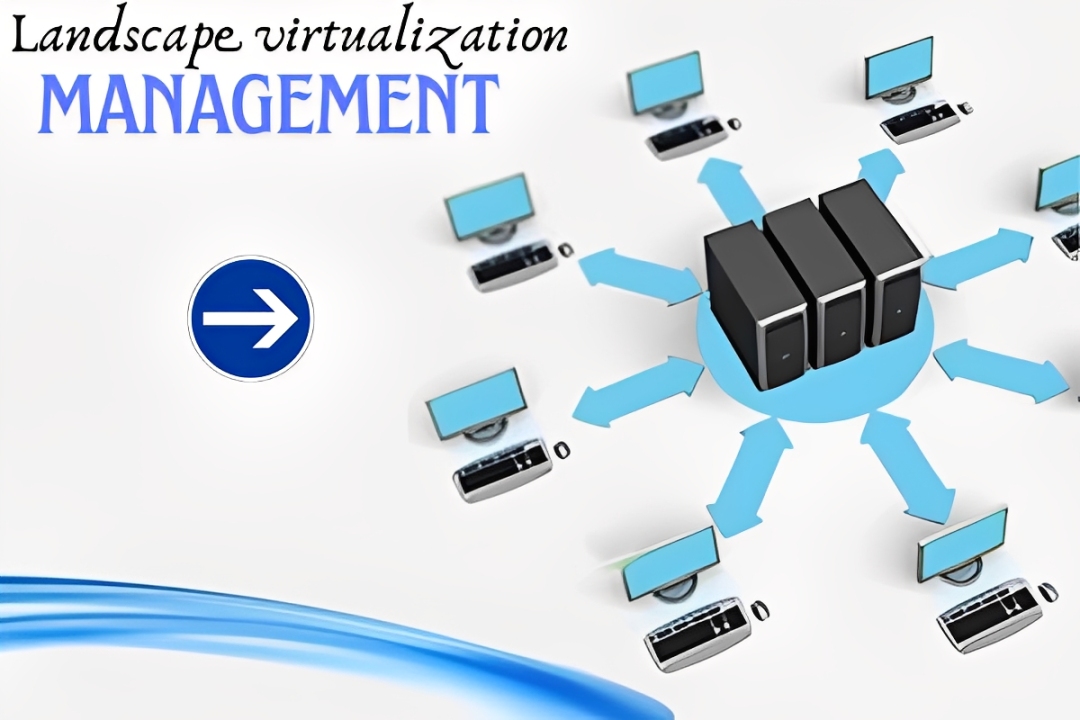
Landscape virtualization management is essentially a monitoring, configuring, optimizing, and securing function for virtualized IT landscapes. “Landscape,” in turn, is defined here as the “entire set of virtual resources used in performing computing operations; servers, applications, software services, operating systems, hypervisors, and middleware levels are all encompassed in a landscape.”
Virtualization provides the capability to abstract compute resources from physical infrastructure. The management of landscape virtualization mainly emphasizes managing the virtual infrastructure and ensuring that the virtual infrastructure is aligned with organizational needs.
Key Components in Virtualized Landscapes
The virtualized IT infrastructure usually consists of the following:
- Hypervisor
These software layers facilitate the use of several virtual machines on a host machine. Popular examples of these softwares include VMware vSphere, Microsoft Hyper-V, KVM, and Xen.
- Virtual Machines and Containers
A virtual machine is like a separate operating system. A container relies on lightweight virtualization.
- Virtual Storage Resources
Software storage pools, disk virtualization, and snapshotting solutions are critical components.
- Virtual Network Infrastructure
Virtual Switches, Network Segmentation Policies, and Gateways are used to manage traffic within virtualized infrastructure.
- Multi-Cloud & Hybrid Deployments
Tasks are usually spread across public cloud providers, as well as on-premises solutions.
The Importance of Landscape Virtualization Management
Efficiency is introduced through landscape virtualization management, while complexity is introduced as well. As the number of virtual elements increases, manual management for such elements would be inefficient. Landscape virtualization management helps in streamlining control for virtual elements, and through such control, organizations can realize stability and statuary control.
Its significance includes:
- Ensuring sustainability of workloads
- Facilitating alignment of resource allocation with performance requirements
- Prevention of downtime and services disruption
- Securing configurations within compliance frameworks.
- Reducing operational costs by avoiding resource waste
Core Objectives of Landscape Virtualization Management
The major aims are:
- Resource Optimization
The managers must provide an adequate amount of computing and storage capability to the applications.
- Centralized Administration
Having virtual infrastructure managed via one interface for control simplifies this process.
- Performance Monitoring
Resource usage can continuously be monitored to avoid bottlenecks or deterioration.
- Security & Compliance
Protection around cloud resources involves access, encryption, and monitoring.
- Scalability
There is a need for organizations to adopt virtualization approaches that are capable of accommodating dynamic workload growth.
Key Advantages of Landscape Virtualization Management
The advantages that can be realized through organizations that implement the management of landscape virtualization are:
- Simplified Operational Complexity
The system is centrally managed for easy configuration and deployment.
- Increased Infrastructure Flexibility
In addition, virtualized environments are able to adapt to their workload requirements easily.
- Increased Cost Efficiency
Virtualization decreases costs for investing in equipment and maintenance.
- Improved Disaster Recovery Abilities
These include virtual machine snapshots, replication, and failover solutions.
- Better Resource Utilization
The unused capacity can be allocated dynamically towards high-priority workload queues.
- Rapid Application Deployment
This technology allows developers to set up environments easily and quickly.
Issues in Landscape Virtualization Management
Organizations should be able to predict some of the problems that may come up as they implement virtualization. Such problems include:
- Risk of increased security due to shared environments
- Lack of qualified personnel to handle virtual systems.
- Complexity of Multi-Cloud Orchestration
- Risk of configuration drift leading to performance issues
- The absence of standardization on virtual platforms
Application of best practices and technology in this regard is crucial in order to efficiently address them.
Best Practices to Effectively Manage Landscape Virtualization
These methods are helpful for effective virtualized landscape management:
- Standardize Virtual Machine Images
Use the accepted templates to maintain consistency.
- Implement Role-Based Access Control
Set access rights according to operational needs.
- Use Automated Resource Monitoring
Deviation alert configuration & Resource Scarcity alert configuration
- Conduct Regular Configuration Audits
Eliminating configuration drift by scheduled review and automated tracking.
- Keep Up-to-Date Documentation
Document virtualization configurations, dependencies, and maintenance schedules.
- Assessment of Infrastructure Needs on Regular Basis
Evaluate the use of resources to justify its expansion or optimization.
- Cybersecurity
Use shielding technologies, encryption, endpoint protection solutions, and vulnerability management products.
Applications of Landscape Virtualization Management
Virtual landscapes can be applied in a very broad way to many sectors. These include:
- Enterprise resource planning systems Enterprise resource planning systems
- Deployment of the application on the
- Data center modernization projects
- Disaster Recovery Services
- Software development and testing environments
- Since the number of
- Virtual Desktop Infrastructure service
The management frameworks are compatible with both private cloud setups as well as public cloud setups, thus facilitating hybrid cloud systems in organizations.
Future Trends in Landscape Virtualization Management
Some of the rising trends that shape virtualization management include:
- Integrations with Artificial Intelligence and Automation
Artificial intelligence modules identify anomalies and execute automated remediation operations.
- Trend towards Containerization & Micro-Services
For containers, there are new management strategies to be applied.
- Edge Virtualization
Distributed virtualization will grow with the acceptance of edge computing.
- Multicloud Governance Platforms
Unified platforms for governance will improve overall visibility in multi-cloud environments.
Conclusion
Managing the virtualization landscape is critical for businesses that want to automate and upgrade their IT operations, minimize infrastructural costs, and ensure flexibility. The implementation of managed controls, automation, and security best practices enables businesses to fully utilize the virtual environment, whether it is on-premises or across multi-cloud infrastructures. With advances in technologies for virtualization, it is expected that successful businesses will have adaptive management policies that align with emerging technologies, regulations, and performance standards. Proper management of the virtualization landscape helps ensure that a business has a stable, scalable, and secure digital foundation.
For more read : How Ezatest Improves Software Quality Through Automated Test Execution