
Introduction
In today’s fast-paced corporate world, it’s crucial for old systems and new apps to function well together so that operations can flow smoothly. The WebLogic Tuxedo Connector is a key part that lets Oracle WebLogic Server and Oracle Tuxedo middleware work together without any difficulties. This makes it easier to do business and transmit information around.
This site goes into excellent detail about how to make connectors for high-performance systems. It uses LSI keywords like “Oracle middleware integration,” “JCA adapter setup,” and “enterprise transaction management.” We want to help tech-savvy readers improve their IT infrastructure by looking at architecture, deployment, and optimization.
Tuxedo Connector Synergy Game-Changer
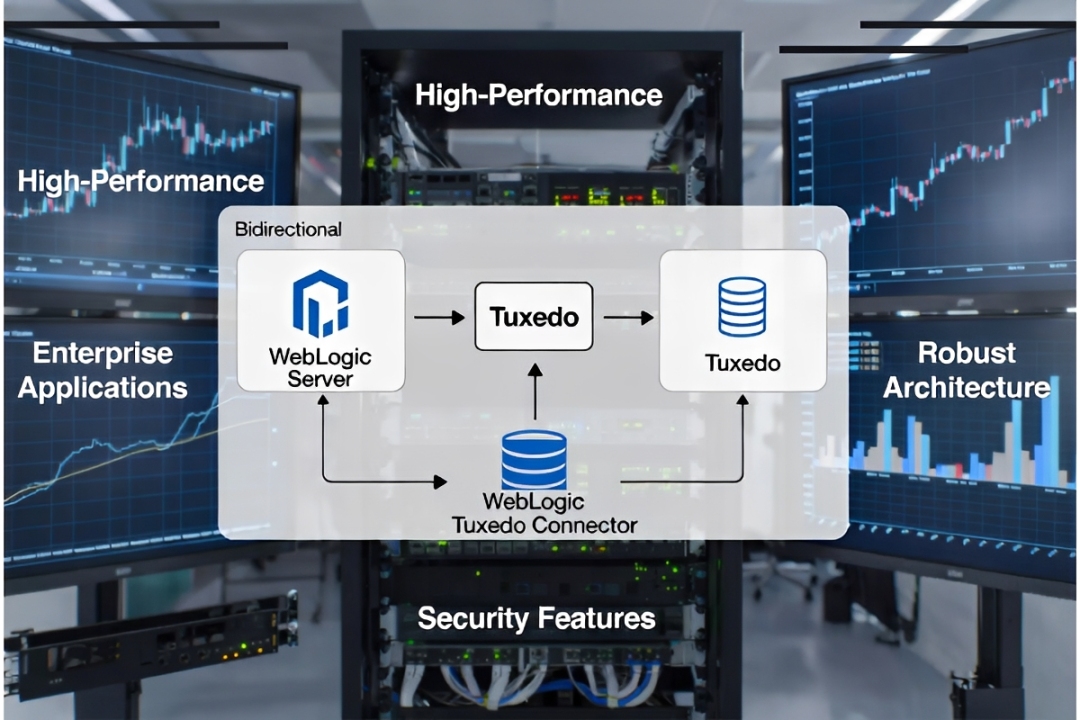
The WebLogic Tuxedo Connector makes it easier for organizations to connect by merging Tuxedo’s C/C++ services with Java EE features. This synergy makes it feasible for two-way communication, which means that old systems can use new web services without having to change a lot of code. It helps you put things up so that they are always available, which means less downtime when it matters most.
Using load balancing and failover, this connector also makes it easier to scale. Developers like code that is straightforward to read since it transforms sophisticated protocols into standard JCA interfaces. This makes systems more robust in distributed architectures and speeds up the time it takes to install them.
Core Architecture Bridge
The WebLogic Tuxedo Connector is built in layers, with service exporters and importers at each level. At its core, it employs JCA 1.5 standards to manage connections, which makes it faster and safer to move data between WebLogic and Tuxedo domains.
This solution has connection factories and resource adapters that manage pooling and threading to get the most out of resources. It works with Oracle middleware to make sure it follows business standards, which is ideal for when you need to manage transactions well.
Deployment Blueprint Guide
Setting up domains in the WebLogic Server console is the first step in deploying the WebLogic Tuxedo Connector. First, set up the WTC resource adapter. After that, make sure everything is working by letting people who are close by and far away connect.
Run a few sample JNDI lookups and service calls to confirm proper configuration. This step-by-step guide shows you how to set up JCA adapters in the best way possible, which decreases the likelihood of making mistakes so that they may be used in production right away.
- Please ensure that Tuxedo is compatible with the version of WebLogic Server you are using.
- Create security realms to limit who can log in.
- Make logs to assist you in fixing problems after deployment.
- Turn on clustering to make sure the system is always functioning.
How to Improve the WebLogic Tuxedo Connector
To maximize the WebLogic Tuxedo Connector, you must adjust the connection pools to handle peak loads. To keep transaction processing from getting stalled, change settings like the maximum number of connections and how long a connection can be idle.
Use caching on services that are used a lot to speed things up as well. These tactics assist in keeping performance high even when things are tough when applied with corporate transaction management.
| Optimization Parameter | Description | Recommended Value |
| Connection Pool Size | Maximum concurrent connections | 50-100 based on load |
| Timeout Settings | Idle and transaction timeouts | 300 seconds |
| Thread Pool Tuning | Worker threads for requests | Match CPU cores x 2 |
| Load Balancing | Distribution algorithm | Round-robin |
WebLogic Tuxedo Connector in Action
The WebLogic Tuxedo Connector has helped institutions in the financial industry link up their legacy mainframe systems with new web apps. This has made it easier to pay quickly. In one case, quick service calls lowered response times by 40%.
Another example from the telecom industry shows how it could connect billing systems. Oracle middleware integration made it possible to change data in real time in this situation. These examples show how useful valuable objects can be in different situations, especially when they are dependable and save money.
Hurdles Overcoming Strategies
A common problem with the WebLogic Tuxedo Connector is that it won’t connect because the settings are wrong. Two expert approaches to detect and fix problems are to map out the whole domain and employ diagnostic tools like WLST scripts.
There may also be problems with how security is set up. Use SSL/TLS protocols to stop this. Setting up JCA adapters is one of these options that gives developers the tools they need to quickly fix problems without putting the system at risk.
- Check the JNDI bindings for errors.
- Watch how much memory the heap is using to make sure there are no leaks.
- Make sure you have backups by using failover domains.
- Use patches to repair bugs that you already know about.
Security Environment Fortified
Setting up role-based access controls in WebLogic realms is necessary to keep the WebLogic Tuxedo Connector safe. Use certificates to encrypt discussions in corporate transaction management so that no one can hear them.
Regular scans and audits for weaknesses make defenses even stronger. This powerful method makes sure that criteria like PCI-DSS are satisfied, which keeps integrations across systems safe.
Advanced Customization Scaling
To make the WebLogic Tuxedo Connector bigger, add custom modules to its resource adapters. You can change it to fit different workloads, like by adding your metrics or logging.
Dynamic reconfiguration is one of the most advanced capabilities that developing enterprises can use. These changes leverage Oracle middleware integration to make sure that the system can manage more traffic without slowing down.
Metrics Monitoring Success
You can use WebLogic diagnostics to monitor the WebLogic Tuxedo Connector, tracking crucial parameters such as performance and error rates. Tools like Oracle Enterprise Manager let you view what’s going on right now on dashboards.
You can tell if something is working by how quickly you reply and how well you use your time and money. This strategy, which is based on data, assists with preventive maintenance, which keeps systems functioning well and smoothly.
| Metric | Purpose | Monitoring Tool |
| Throughput | Transactions per second | WebLogic Console |
| Error Rate | Failed connections | Diagnostic Framework |
| Latency | Response time | Enterprise Manager |
| CPU Usage | Resource consumption | JMX Beans |
WebLogic Tuxedo Connector Future Trends Horizons
The WebLogic Tuxedo Connector may now work with cloud-native updates for hybrid deployments. This feature is one of the most critical upgrades. DevOps works better when orchestration and Kubernetes work together.
AI-driven improvements are coming that will make it easier to set up JCA adapters. These changes will help businesses be more flexible and stay up with new technologies.
Frequently Asked Questions
What is the purpose of the WebLogic Tuxedo Connector?
It lets Oracle WebLogic Server and Tuxedo services talk to each other in both directions, which makes business transactions go faster.
What does the WebLogic Tuxedo Connector do to improve things?
By increasing connection pooling and load balancing, it minimizes latency and makes systems that get a lot of traffic more scalable.
Can you use the WebLogic Tuxedo Connector in the cloud?
Yes, it can be used in both hybrid and cloud contexts. It integrates with Oracle Cloud and other platforms to make scaling easy.
What sorts of protection does the WebLogic Tuxedo Connector offer?
It has access limits, authentication realms, and SSL/TLS encryption to keep data safe while it is being transferred.
Can the WebLogic Tuxedo Connector assist in eliminating outdated systems?
Indeed, it facilitates the seamless transition from old Tuxedo apps to new Java EE apps, eliminating the need for a complete overhaul.
Conclusion
The WebLogic Tuxedo Connector is a crucial part in making systems that are quick and strong. It helps firms work well in difficult IT environments by focusing on integration, optimization, and security.
These methods can help things go more easily, which will make people more creative and productive. There are several middleware solutions you may utilize if you know how to use this connector.
For more, read: Quantifying Global Active Devices in Heterogeneous Network Environments